Healthy Her | Stroke Risks & Symptoms
- Category: Women's Health
- Posted On:

Stroke is a leading cause of death for women. A stroke occurs when blood flow to an area of the brain is cut off or a blood vessel bursts. Without oxygen and nutrients, brain cells begin to die within minutes, which can lead to permanent damage, disability, or death. It is a critical medical emergency and requires immediate intervention. In the United States, 1 in 5 women between the ages of 55 and 75 will have a stroke. This is alarming, but there is good news: 4 in 5 strokes are preventable. That is why it's important to know your risk factors and take action to protect your health.
Understand Your Risk
Stroke risk factors are divided into two main categories: modifiable (lifestyle and medical conditions) and non-modifiable.
Non-modifiable risk factors include:
- Age: Stroke can happen at any age, but stroke risk doubles every 10 years after age 55.
- Gender: Because women generally live longer than men, more women have strokes over their lifetimes.
- Race/Ethnicity: In the United States, African Americans, Hispanic Americans, and Native Americans have a higher incidence of stroke compared to other groups.
Modifiable factors in your control account for 82% to 90% of all strokes. Those risk factors are:
- High blood pressure: Hypertension damages arteries and increases stroke risk significantly. It is the single most important modifiable risk factor.
- Atrial Fibrillation (AFib): This irregular heartbeat causes blood to pool in the heart, potentially forming clots that travel to the brain.
- Diabetes: High blood sugar damages blood vessels over time, putting individuals at up to a four times greater risk.
- Obesity: Excess body weight and obesity are linked to an increased risk of high blood pressure, diabetes, heart disease, and stroke. Losing as little as 5 to 10 pounds can significantly affect your risk.
- High Cholesterol: High LDL ("bad") cholesterol contributes to plaque buildup in arteries.
- Smoking & Tobacco Use: Smoking almost doubles the risk of an ischemic stroke by damaging blood vessels and reducing oxygen in the blood.
- Alcohol & Substance Abuse: Excessive alcohol consumption (more than 2 drinks a day) and illegal drug use greatly increase stroke risk.
Understanding your stroke risk can help you and your healthcare provider adjust medications or implement healthier lifestyle habits. If you want to know your risk, you can take this risk assessment from the American Stroke Association: https://www.stroke.org/en/about-stroke/stroke-risk-factors/stroke-risk-assessment
If you’re having a stroke, call 911. Immediate treatment may minimize the long-term effects of a stroke and prevent death. Thanks to recent advances, stroke treatments and survival rates have improved greatly.
Recognize Stroke Symptoms
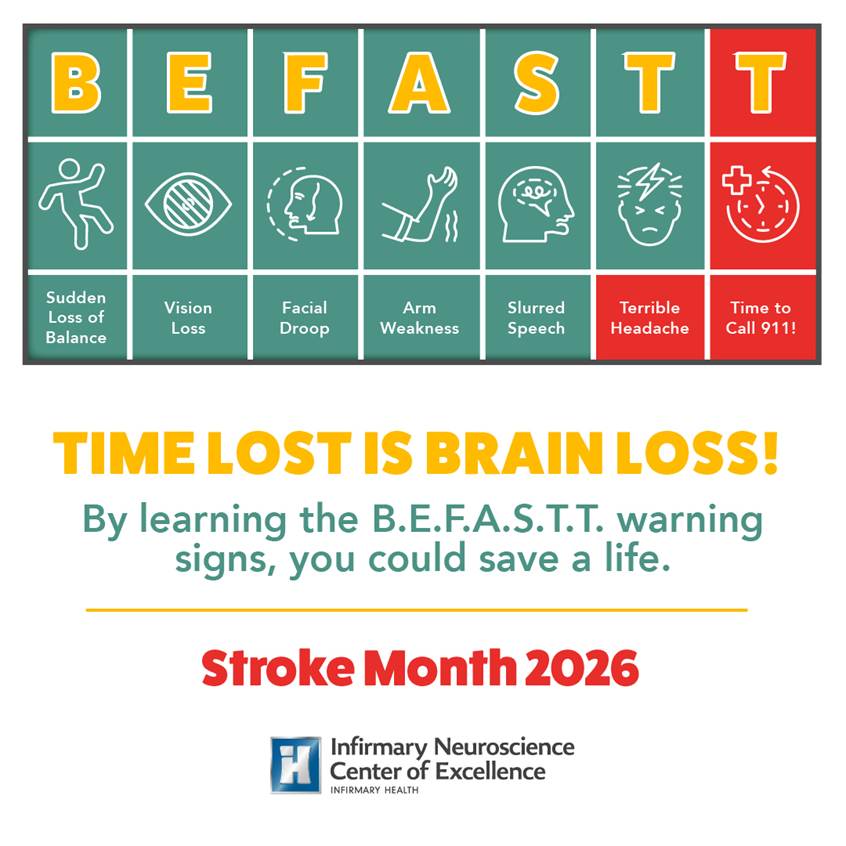
BE FASTT is an acronym used to quickly recognize the sudden warning signs of a stroke. It reminds you to act immediately because every minute counts in preventing permanent damage. Time loss is brain loss. If you or someone you are with begin experiencing stroke symptoms, call 911 immediately.
Stroke Care at Infirmary Health
Infirmary Health’s vision is to be the Gulf Coast region's FIRST CHOICE for healthcare. Our hospitals and freestanding emergency departments have earned the following accreditations for stroke, illustrating our staff's commitment to providing high-quality stroke care to our patients.
Mobile Infirmary - The Joint Commission Certified Comprehensive Stroke Center
Mobile Infirmary Emergency | Saraland - The Joint Commission Certified Acute Stroke Ready Hospital
Thomas Hospital - The Joint Commission Certified Primary Stroke Center
To learn more about stroke and Infirmary Health’s Neuroscience Center of Excellence, visit this link: https://www.infirmaryhealth.org/services/stroke/
